

CNIL
French guidance on digital rights, data protection, procedures and practical tools.
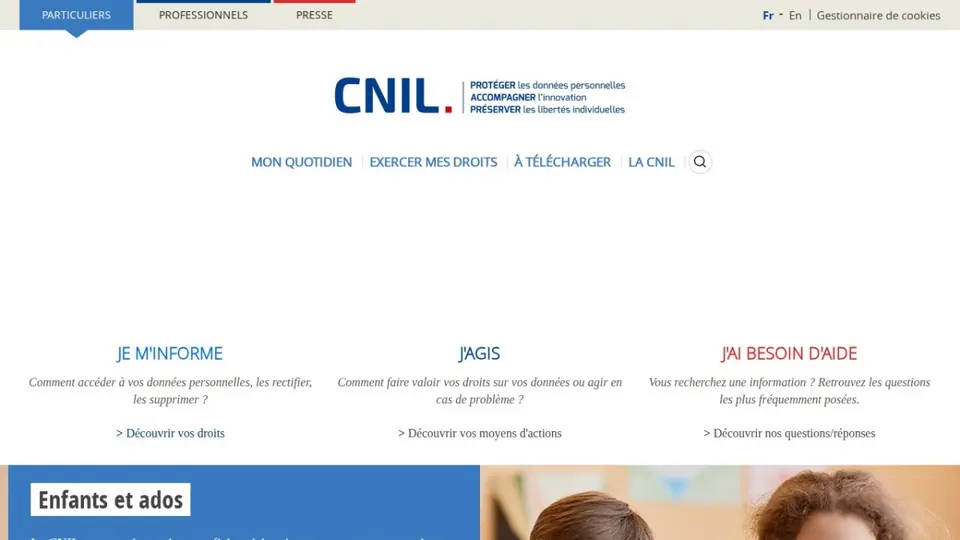
Screenshot captured on an unrecorded date. The current website may have changed.
Understand a data protection right
Read the French data authority’s guidance and procedures.
Check first: Identify the data controller and the request to send.

Compare this resource with other directory records →
Clear browsing history or change tracker choices?
- History
- Review navigation traces kept by the browser.
- Cookies
- Review the website’s settings and choices.
- Describe the intended result: remove a local trace or change a tracker choice.
- Read the corresponding CNIL resource, then the browser or website settings.
- Record the setting actually changed and check its state afterwards.
Fictional example: Alex clears history and assumes a website’s trackers were refused. These are different actions. Alex returns to that website’s choice panel to check the relevant selection.
Your useful record: Setting, browser, website and date; no account identifier is needed.
This settings-reading method is not a legal audit of the website.
Editorial method informed by CNIL — Cookies et pistage. Documentation consulted on . Examples are fictional exercises, not results from a live service test.
Separate tracking, audience and account protection
The public guidance separates cookies and tracking, social networks, cyberviolence, multifactor authentication and passwords. Identify the actual problem before changing every setting.
- Tracking
- Cookies and data collected during browsing.
- Audience
- Shared information and account visibility.
- Access
- Authentication and recovery are separate checks.
Official documentation
Documentation consulted on .
Practical methods for this resource
Editorial selection, without website certification. Read our method.