

Semantic Scholar
AI assisted discovery of papers, authors, citations and research topics.
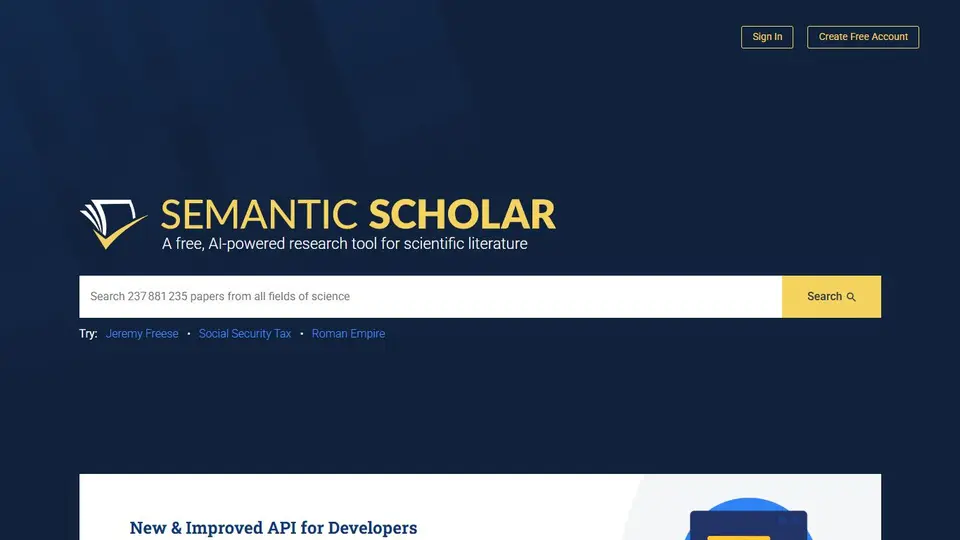
Screenshot captured on an unrecorded date. The current website may have changed.
Explore studies related to a paper
Follow authors, citations and topics around a publication.
Check first: Read the studies before inferring a consensus.

Compare this resource with other directory records →
Use an automatic summary to guide reading
Semantic Scholar TLDRs are AI-generated summaries intended to help locate papers. Treat them as an entry point. Before making an argument, read the study and check population, method and limitations; a short summary cannot show everything.
- Discovery
- Read the title, authors and publication date.
- Summary
- Distinguish the automatic TLDR from the authors’ abstract.
- Evidence
- Return to the paper before citing a result.
- TLDR coverage
- The consulted FAQ limits TLDR coverage to computer science and biomedicine. A record without a TLDR is therefore not evidence of low relevance or quality.
Source: Semantic Scholar — What is a TLDR? · consulted on
Can a TLDR stand in for a study conclusion?
Prefer the paper and a verified passage. An automatic summary may omit important conditions.
Initial profile documentation
Initial profile documentation consulted on . Added details carry their own source and consultation date above.
Editorial selection, without website certification. Read our method.